Culture Statement — How We Work
How We Work
What it means to work with CWM, join a workshop, or build a project with us.
In the Room
What a workshop actually looks like.
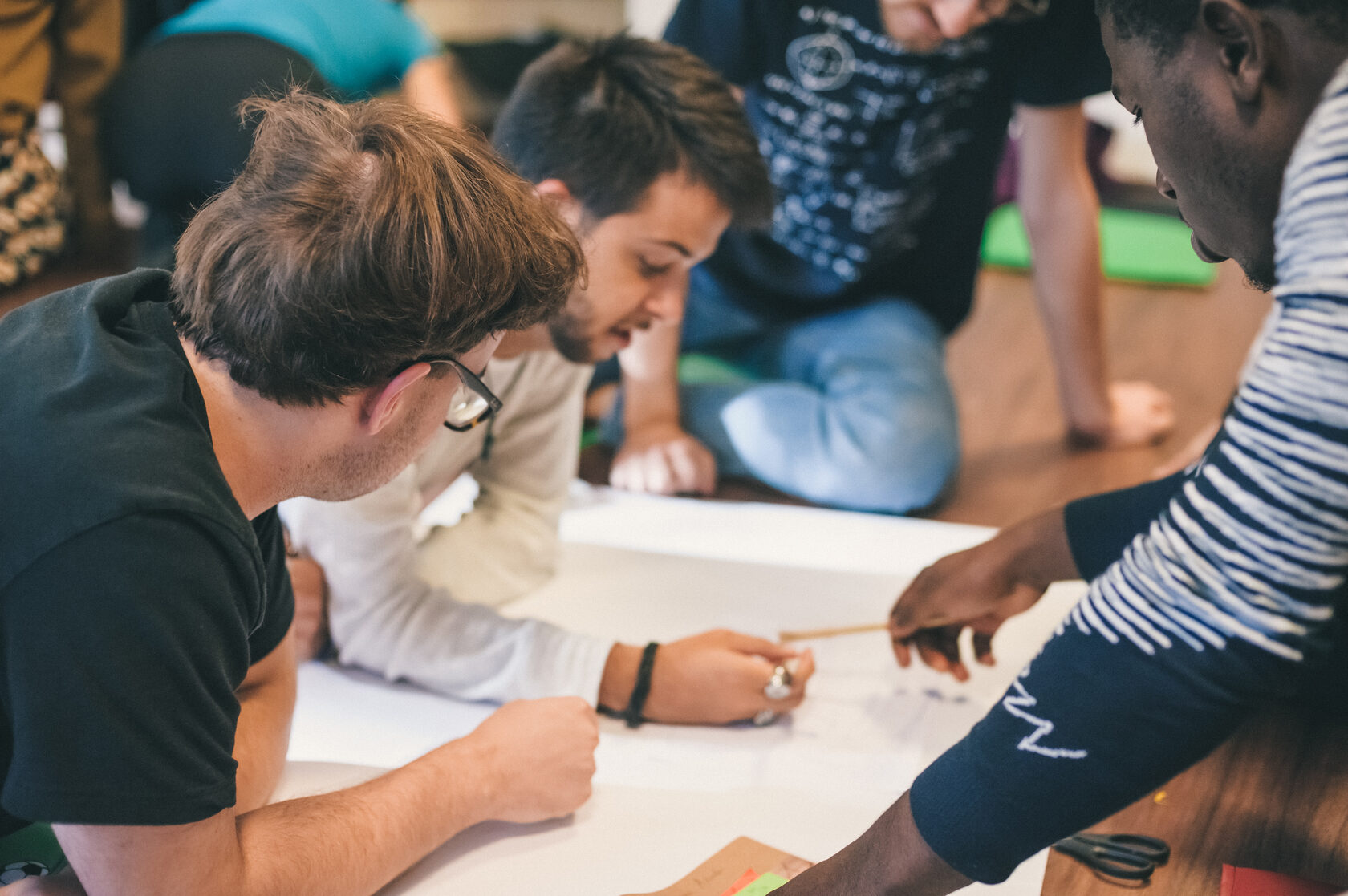
A working session in progress: participants around a table, writing their own notes, deciding their own questions.
Culture is not a poster in the room. It is what people can count on when the work gets difficult: how decisions are made, how disagreement is handled, how young people are treated as authors of the work rather than decoration, and what happens after something goes wrong.
Principles — Section 03
Seven principles
-
Human rights are the frame, not a theme.
Every workshop starts from the rights being claimed, contested, or denied in the room — not from a topic we have already decided the group should care about.
-
Participation means the power to shape the work.
Young people choose the question, the form, and what counts as a good ending. They are not asked to confirm what we have already written.
-
The body is part of the thinking.
We work with breath, posture, silence, and movement because the work lives in the body before it becomes a sentence, and we do not edit it out.
-
Consent is practical, not a promise.
Anyone can pause, leave, refuse a scene, or change their role at any point — and we make that visible, in plain language, before the work begins.
-
Quality is visible in the design, not in the adjective.
We judge a workshop by whether the room works: who speaks, who is heard, who is missing, and what people can carry with them after.
-
We record what did not work.
Every debrief names at least one thing that failed or hurt, and we keep those notes so the next group does not have to learn it again from scratch.
-
Delivery and experiment are both protected.
A workshop with a partner and a try-out with a new method both get real time, real money, and real rigour. Neither is more important than the other.
What You Can Expect
What participants can expect.
- You will be told, in plain language, what the session is about and how it will run.
- You can stop, leave, or change your role at any time, without having to explain why.
- You will be asked before your words, image, or story is shared beyond the room.
- You will see a short debrief note from the session, including what did not work.
- You will be named as a co-author of the work, not as an audience for it.
Working With Us
What it means to work with us.
- You bring the practice. We bring the rights frame, the partner network, and the room.
- You are paid for preparation, not only for delivery.
- You are named in the work.
- You are expected to read the Culture Statement before you sign.
- We agree the question together, before we agree the format.
- The young people in the project are co-authors, not beneficiaries.
- We tell you in advance what we will and will not do, in writing.
- If something goes wrong, we say so in the debrief, not only afterwards.
This page is the public summary of our Culture Statement. Read it alongside our Vision, Mission & Ten-Year KPI Framework, our Human Rights Education Framework, and our Quality Framework.
Culture is not what we say about the room. It is what a person can count on when the work gets difficult.
1017 BR Amsterdam
The Netherlands